South Korea’s Physical AI Push: Universities Lead Industrial Robotics Race
South Korea is moving beyond software AI toward physical AI in manufacturing, with government backing and university-led test labs driving a bold industrial robotics strategy.
AsiaAIFrontNews7 min read
In This ArticleJump to a section
While global AI discourse fixates on large language models and data centers, South Korea is quietly building a parallel AI race—one fought on factory floors.
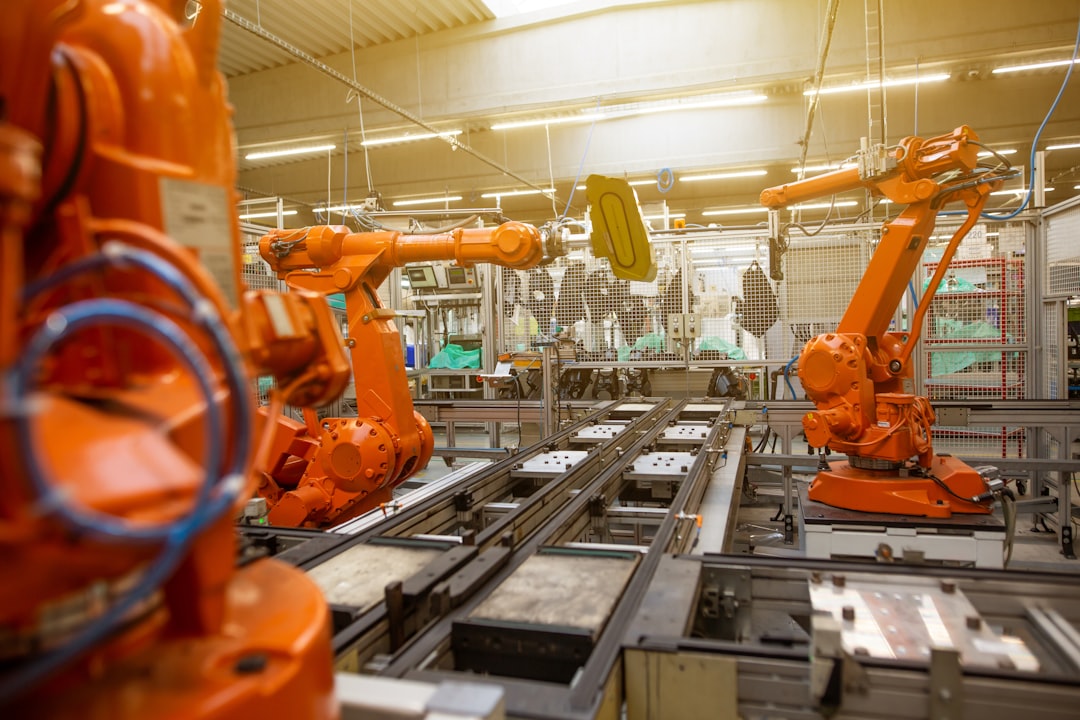
Under President Lee Jae Myung’s administration, physical AI has been elevated to a national strategic priority, with Jeonbuk National University completing an 846-square-meter manufacturing technology test lab equipped with autonomous mobile robots, robotic arms, and real-time sensor networks designed to replicate live industrial environments.
For manufacturing-dependent economies and global supply chain players watching where the next automation wave originates, Korea’s institutional bet on embodied AI deserves far closer attention than it has received in Western coverage.
Key Takeaways
President Lee Jae Myung has designated physical AI as a core pillar of Korea’s national AI strategy, targeting manufacturing and industrial automation.
Jeonbuk National University has opened an 846-square-meter physical AI test lab replicating real production floor conditions with autonomous robots and sensor systems.
Korea’s model routes physical AI R&D through national universities, accelerating industry partnerships and technology transfer to manufacturers.
The strategy differentiates Korea from China’s scale-driven robotics push and the US software-first AI paradigm, targeting a gap in deployment-ready industrial AI.
Physical AI—a term describing AI systems that perceive and act in the physical world, including autonomous robots, sensor-driven machinery, and adaptive manufacturing systems—has moved from research jargon to presidential vocabulary in Seoul. President Lee Jae Myung’s administration has framed it not merely as a technology investment but as an economic sovereignty issue: Korea’s manufacturing sector accounts for roughly 27% of GDP, and automating it intelligently is seen as existential in the face of competition from lower-cost producers.
The government’s strategic logic is straightforward. Korea already leads in semiconductor fabrication, shipbuilding, and battery manufacturing—all sectors where precision robotics and real-time AI decision-making can deliver compounding efficiency gains. By embedding AI directly into the physical production stack rather than layering software on top, Seoul aims to create a competitive moat that is harder to replicate than algorithmic advances alone. This is a meaningful departure from the software-platform model that dominates Western AI policy thinking.
Inside Jeonbuk’s Manufacturing AI Lab: Real-World Testing Infrastructure
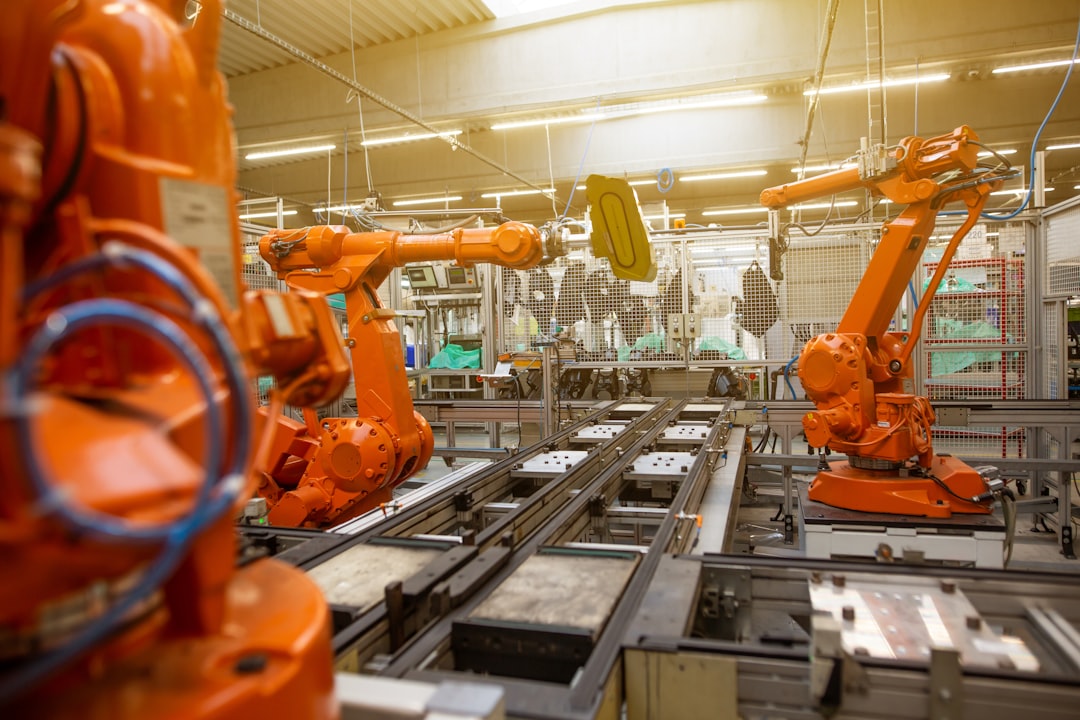
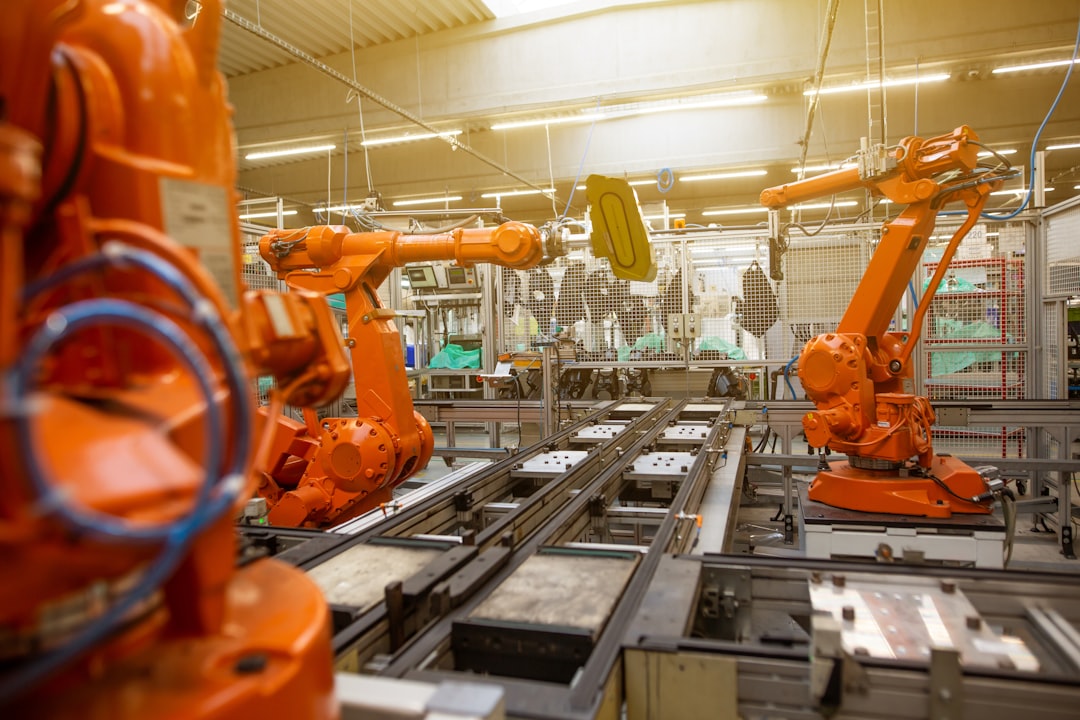
Jeonbuk National University’s new facility is the most visible expression of this strategy. The 846-square-meter lab is designed not as a conventional research space but as a functional mirror of an industrial production floor. Autonomous mobile robots navigate the facility dynamically, coordinating in real time with fixed robotic arms on simulated assembly tasks. A dense layer of sensors feeds continuous data into AI systems that make autonomous adjustments—rerouting robot paths, flagging anomalies, and recalibrating processes without human intervention.
What distinguishes this from standard university robotics labs is the deliberate fidelity to industrial conditions: variable loads, shift-change simulations, and multi-robot coordination scenarios that test edge cases manufacturers actually encounter. The facility is intended to compress the gap between prototype and deployment-ready system—a bottleneck that has historically slowed industrial AI adoption globally. For international manufacturers and technology licensors, this creates a credible proving ground that could accelerate partnership discussions.
How Jeonbuk’s Physical AI Lab Works
1
Environment Replication
The 846 m² lab simulates live production floor conditions, including variable loads and multi-robot coordination.
2
Sensor Data Collection
Real-time sensor networks feed continuous operational data to onsite AI systems.
3
Autonomous Decision-Making
AI models adjust robot paths, flag anomalies, and recalibrate processes without human intervention.
4
Technology Transfer
Validated systems are transferred to industry partners, shortening time from lab prototype to factory floor deployment.
University-Led AI Development: Korea’s Institutional Model
Korea’s decision to route physical AI leadership through national universities rather than solely through large conglomerates or government agencies is a structural choice with significant implications. National universities like Jeonbuk operate under a mandate to serve regional industrial ecosystems—in Jeonbuk’s case, the North Jeolla Province manufacturing corridor. This creates tighter feedback loops between researchers and local manufacturers than typically exist in centralized national lab models.
Industry partnership mechanisms are built into the facility’s operating model. Companies can access the test environment to validate their own automation systems, run joint research projects, or license technologies developed on-site. This differs from the more common pattern in which university research requires lengthy commercialization cycles before reaching factory floors. The rapid prototyping and deployment-readiness focus is intentional—and it signals that Korea is not building academic infrastructure for its own sake but for near-term industrial competitiveness.
Global Competitive Context: Why Physical AI Matters Now
The timing of Korea’s push is not incidental. The global AI data center construction boom—driven by hyperscalers expanding capacity across Asia and North America—is itself generating acute demand for automation solutions in hardware assembly, logistics, and precision fabrication. Korea’s semiconductor and advanced manufacturing industries sit directly in that supply chain, making physical AI capability a prerequisite for capturing a larger share of that buildout.
Strategically, Korea is threading a needle between two dominant robotics narratives. China’s approach emphasizes scale and cost—deploying large numbers of relatively standardized robots rapidly through companies like UBTECH and Unitree. The US approach, led by firms like Boston Dynamics and Figure AI, focuses on general-purpose humanoid platforms with long commercialization horizons. Korea’s bet is on deployment-ready, sector-specific physical AI that can be integrated into existing manufacturing lines faster than either alternative. Whether that differentiation holds as both Chinese and US competitors iterate will be the defining test of the strategy over the next three to five years.
Note
Note: Korea’s physical AI strategy is still in early institutional build-out. Commercial-scale deployment timelines and the scope of workforce transition planning have not yet been publicly detailed by the government, and outcomes will depend heavily on sustained policy continuity and private sector co-investment.
Korea’s national AI policy framework is being shaped to accommodate physical AI’s unique regulatory demands. Unlike software AI, autonomous manufacturing systems raise immediate questions around liability for machine-caused production errors or workplace incidents—areas where Korean labor law and industrial safety standards will require clarification as deployments scale. The government has signaled awareness of this gap, though formal autonomous systems liability frameworks have yet to be finalized.
Internationally, physical AI capabilities position Korea as a potential technology exporter rather than merely a manufacturing services provider. Countries in Southeast Asia and the Middle East that are investing in industrial upgrading represent plausible markets for Korean physical AI systems and the university-developed IP behind them. Workforce transition planning, however, remains the most politically sensitive dimension: automating Korea’s own manufacturing base at scale will displace jobs in sectors—automotive, electronics assembly, logistics—that have historically provided middle-income employment. How the government balances acceleration with displacement mitigation will shape both domestic political durability and the credibility of Korea’s model as an export template.
Key Takeaways
Presidential priority: President Lee Jae Myung has explicitly designated physical AI as central to Korea’s global competitiveness strategy, anchoring it in manufacturing rather than software platforms.
Flagship infrastructure: Jeonbuk National University’s 846 m² physical AI lab offers a real-world industrial testing environment designed to accelerate deployment-ready robotics systems.
Institutional model: Routing R&D through national universities with direct industry linkages gives Korea a faster commercialization path than centralized lab or conglomerate-only models.
Strategic differentiation: Korea is targeting a gap between China’s scale-focused robotics and the US’s long-horizon humanoid AI, betting on sector-specific, deployment-ready physical AI for near-term industrial adoption.
Regulatory gaps remain: Liability frameworks for autonomous manufacturing systems and workforce transition plans are still underdeveloped relative to the pace of the technology push.
Want to go deeper?
Subscribe to Asia AI Front for concise analysis of AI shifts across Asia and Russia.