Alibaba Launches Qwen Robot Suite to Advance Embodied AI
Alibaba enters embodied AI with its Qwen Robot Suite, signaling China's strategic shift from chatbots to physical-world robotics in the global AI race.
AsiaAIFrontNews5 min read
In This ArticleJump to a section
While the world’s attention has been fixed on chatbot benchmarks and text generation, Alibaba just crossed into a far more consequential frontier: machines that can see, reason, and act in the physical world.
Alibaba Group has launched the Qwen Robot Suite, its first dedicated suite of AI models for robots, developed by its in-house research unit Tongyi Lab. The product has entered pilot testing with a select group of Alibaba ecosystem partners.
For technologists, investors, and policymakers outside China, this signals that the country’s AI ambitions are no longer confined to digital platforms—and that the global race for embodied AI just got a serious new entrant.
Key Takeaways
Alibaba’s Tongyi Lab has released the Qwen Robot Suite, the company’s first AI model suite purpose-built for robotic systems.
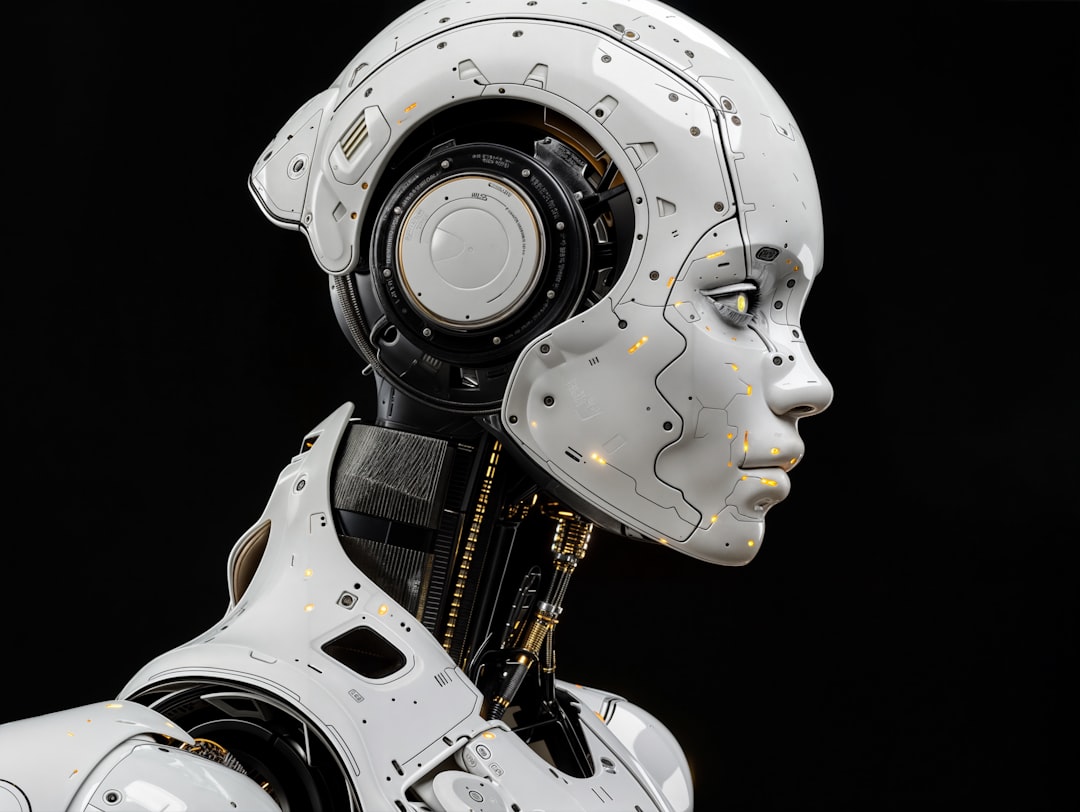
The suite is designed to enable embodied AI—robots that perceive environments, reason about them, and take physical actions.
Pilot testing is underway with selected Alibaba partners, signaling a near-term push toward commercial deployment.
The move positions Alibaba directly against Tesla Optimus, Boston Dynamics, and a growing field of Western and Asian robotics-AI players.
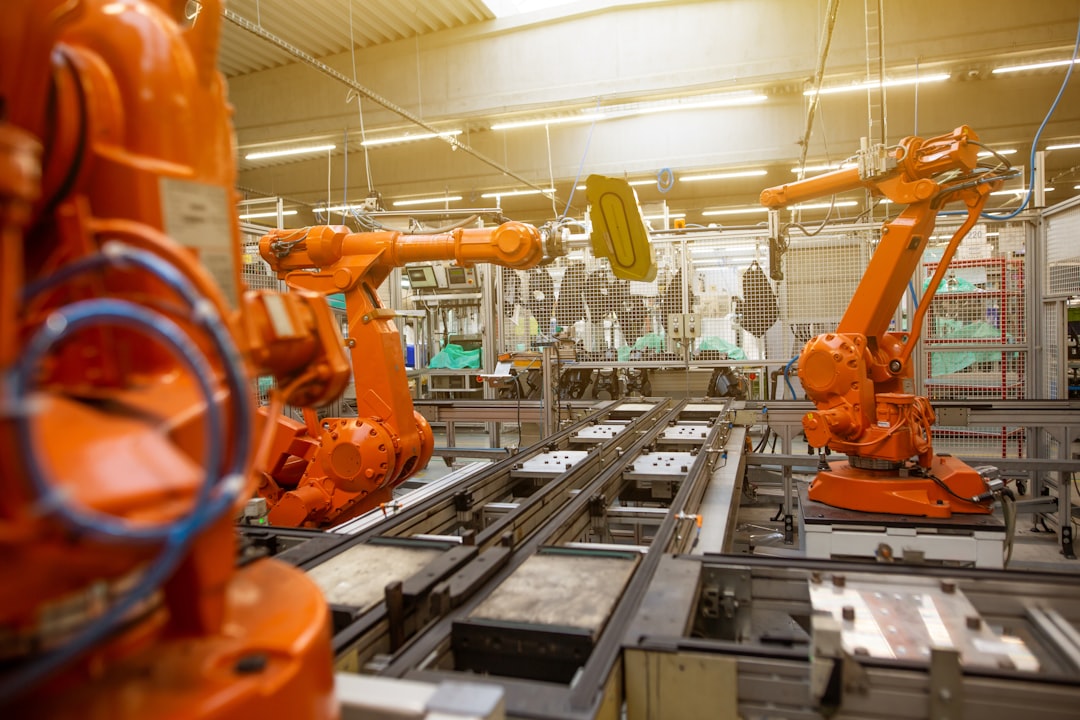
Embodied AI refers to artificial intelligence systems that operate beyond screens and text interfaces—robots and machines that must sense their surroundings, interpret real-world contexts, and execute physical actions in response. Unlike a chatbot that processes a query and returns text, an embodied AI agent might navigate a warehouse, pick up an irregularly shaped object, or assist a human worker on an assembly line.
The global competition in this space is intensifying. The United States, European Union, and China have each identified robotics-integrated AI as a strategic priority. Analysts at Goldman Sachs have projected the humanoid robot market alone could reach $38 billion by 2035. China’s Ministry of Industry and Information Technology has explicitly targeted humanoid robots as a key sector in its industrial modernization plans. For global investors, embodied AI is where the next major hardware-software convergence is playing out—and Alibaba’s entry raises the competitive stakes considerably.
Alibaba’s Qwen Robot Suite: Features and Capabilities
The Qwen Robot Suite is developed by Tongyi Lab, Alibaba’s dedicated AI research division responsible for the company’s broader family of Qwen foundation models. The suite is engineered to address the core technical challenges of physical-world AI: multi-modal perception, spatial reasoning, task planning, and motor control coordination.
Rather than a single general-purpose model, the suite packages specialized components to handle distinct aspects of robotic operation—from interpreting visual input and understanding scene geometry to generating actionable motor commands. This modular design is significant; it allows hardware partners to integrate only the components relevant to their specific robotic platforms, lowering the barrier for adoption across different form factors.
Pilot testing is currently underway with a curated group of Alibaba ecosystem partners. That closed rollout is a deliberate strategy: real-world robotic deployments carry physical risks that purely digital AI products do not, and iterating with trusted partners allows Tongyi Lab to gather safety-critical performance data before broader release.
Strategic Positioning in the Global Embodied AI Race
Alibaba’s move arrives as Tesla continues developing its Optimus humanoid robot, Figure AI raises capital at billion-dollar valuations, and Boston Dynamics deepens its AI integration under Hyundai ownership. In China, rivals including Baidu, Unitree Robotics, and a wave of well-funded startups are also racing to fuse large language models with robotic hardware.
What Alibaba brings that most pure-play robotics companies lack is an existing operational ecosystem at massive scale. Its logistics arm Cainiao operates one of the world’s largest automated warehouse networks, and Alibaba’s retail and last-mile delivery infrastructure represents a natural proving ground for embodied AI systems. Successful pilots within that ecosystem could compress the timeline from lab demonstration to commercial deployment dramatically.
Geopolitically, China’s robotics push carries additional weight. US export controls on advanced semiconductors have accelerated Chinese tech giants’ incentives to develop proprietary AI stacks end-to-end—from model architecture down to hardware integration—rather than rely on foreign components.
Deploying AI to physical robots is a fundamentally harder engineering problem than deploying it to cloud services. Digital AI failures are recoverable; a robot misinterpreting its environment can cause property damage or injury. This demands far higher reliability standards and forces model developers to solve for latency, sensor fusion, and edge-compute constraints simultaneously.
The Qwen Robot Suite’s multi-modal architecture—handling vision, language, and action generation in concert—reflects lessons from earlier foundation models but requires the addition of embodied reasoning: understanding how objects behave under physical forces, how to sequence manipulation tasks, and how to recover from unexpected states.
For the broader AI industry, Alibaba’s entry validates the thesis that the next wave of foundation model competition will be fought on physical platforms, not just benchmarks. As more Chinese and Western tech giants commit R&D resources to embodied AI, the pace of capability improvement is likely to accelerate sharply over the next 18 to 24 months.
Note
Note: The Qwen Robot Suite is currently in limited pilot testing. Performance data, specific model benchmarks, and a broader commercial launch timeline have not yet been publicly disclosed by Alibaba.
Key Takeaways
Historic first: The Qwen Robot Suite marks Alibaba’s first dedicated AI product line for robotic systems, developed by Tongyi Lab.
Embodied AI defined: The suite targets machines that perceive, reason, and act physically—a harder and higher-stakes frontier than conversational AI.
Ecosystem advantage: Alibaba’s logistics and warehouse operations give it rare at-scale testing environments that most robotics startups lack.
Global implications: The launch intensifies competition with Tesla Optimus, Figure AI, and other Western robotics-AI players, while reflecting China’s broader strategic investment in physical-world automation.
Want to go deeper?
Subscribe to Asia AI Front for concise analysis of AI shifts across Asia and Russia.