Taiwan is best known for making the chips that run the world’s AI—but a Taiwanese company now wants to run the AI that transforms the world’s enterprises.
LY Corporation, the messaging and communications platform giant with roots in Taiwan’s digital consumer market, has unveiled Agent i: a strategic agentic AI framework designed to move organizations from AI experimentation to fully AI-First operating models. The launch positions LY not merely as a chat app company, but as a B2B AI infrastructure provider for the region.
For global enterprise technology leaders, the significance extends far beyond Taiwan: Agent i represents a new class of locally engineered agentic platforms challenging the assumption that enterprise AI transformation must be powered by OpenAI, Google, or Microsoft.
Key Takeaways
- LY Corporation has launched Agent i, an agentic AI framework targeting enterprise AI-First transformation in Taiwan and broader Asia.
- Agent i deploys autonomous AI agents across customer service, operations, and workforce workflows—differentiating from static copilot tools.
- The platform is designed to reduce enterprise reliance on foreign AI vendors such as OpenAI and Microsoft Copilot.
- Taiwan’s broader AI adoption push, backed by government industrial policy, gives Agent i a strong domestic launchpad before regional expansion.
Who Is LY Corporation and Why It Matters for Taiwan’s AI Economy

LY Corporation—formed through the integration of LINE and Yahoo Japan’s parent operations—operates one of Asia’s most deeply embedded digital communication ecosystems, with LINE commanding over 22 million monthly active users in Taiwan alone, representing a penetration rate above 90% of internet users. That footprint gives LY an extraordinary distribution advantage: enterprises already using LINE for customer communication can layer Agent i directly onto existing workflows without re-platforming.
Historically, LY’s Taiwan business focused on consumer messaging, digital payments, and media. The Agent i launch marks a deliberate strategic pivot: LY is repositioning itself as the enterprise AI middleware layer for organizations that live inside its communication ecosystem. This mirrors a trajectory seen in China with WeChat’s enterprise tools (WeCom) and in South Korea with Kakao’s B2B expansion—but with a distinctly Taiwan-first localization advantage.
For Taiwan’s broader economy, this matters enormously. The island’s global identity has long been anchored in semiconductor manufacturing through TSMC and its supply chain. Agent i signals that Taiwanese firms are building up the software and services layer of AI—a critical step toward becoming an AI economy, not just an AI hardware supplier. Taiwan’s government has explicitly targeted AI services as a growth pillar under its national AI development strategy, making LY’s timing deliberate.
What Is Agent i? Breaking Down the Platform
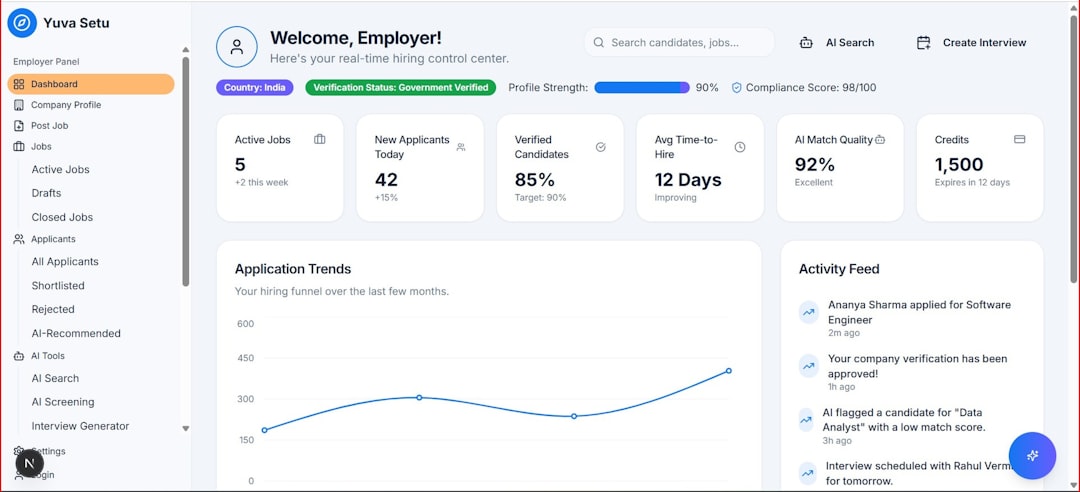
Agent i is built around the concept of agentic AI—systems that do not merely respond to prompts but autonomously plan, execute multi-step tasks, and hand off work across other agents and enterprise systems. This is a meaningful architectural leap beyond tools like Microsoft Copilot or Google Duet AI, which function primarily as intelligent assistants requiring human initiation at each step.
According to LY Corporation’s June 2026 announcement, Agent i provides three core capability layers: Sense (ingesting data from communication channels, CRMs, and ERPs), Think (reasoning across that data to determine optimal actions), and Act (executing decisions within connected business systems with minimal human intervention).
On deployment, LY has indicated that early enterprise clients in Taiwan’s retail and financial services sectors are piloting Agent i for customer inquiry automation and back-office reconciliation. While LY has not disclosed specific client names publicly at launch, the company confirmed pilot programs are running with partners across telecommunications, e-commerce, and banking verticals—sectors where Taiwan has significant enterprise density.
On pricing, LY Corporation is offering Agent i under a tiered SaaS licensing model: a standard tier for SMEs integrating up to five agents within existing LINE Business accounts, and an enterprise tier with custom agent orchestration, dedicated API access, and on-premise deployment options for regulated industries. Enterprise tier pricing is negotiated based on agent volume and data residency requirements—a structure that directly addresses the compliance concerns that have slowed Microsoft and OpenAI adoption in Taiwan’s financial sector.
LY Corporation’s chief product officer stated at the platform’s launch event: “Agent i is not a chatbot upgrade. It is a rethinking of how organizations run—every workflow, every customer interaction, every internal process should be AI-native from day one.”
How Agent i Works in an Enterprise Setting
-
1
Sense
Agent i ingests signals from LINE messages, CRM data, and enterprise ERP systems in real time.
-
2
Think
Embedded reasoning models analyze context, prioritize tasks, and plan multi-step responses autonomously.
-
3
Act
Agents execute decisions—drafting responses, routing tickets, updating records—without human initiation at each step.
-
4
Learn
Outcomes feed back into the agent memory layer, improving accuracy and reducing escalation rates over time.
Taiwan’s Path to AI-First Enterprise Adoption

Taiwan’s enterprise sector faces a familiar set of adoption barriers: high integration costs for legacy ERP systems, a shortage of AI engineering talent, and executive hesitancy rooted in unclear ROI. According to a 2025 survey by the Taiwan Institute of Economic Research, fewer than 18% of Taiwan SMEs had deployed any form of AI tool in core operations—well behind South Korea (31%) and Singapore (44%) among Asian peers.
LY’s Agent i attempts to shortcut these barriers by leveraging infrastructure enterprises already use. Since a large majority of Taiwan businesses already operate LINE Official Accounts for customer communication, onboarding to Agent i requires no new communication stack—just agent configuration on top of existing channels. This lowers the practical barrier from a multi-year digital transformation project to a workflow-layer upgrade.
The competitive angle is also pointed. Microsoft’s Copilot for M365 and Salesforce’s Agentforce have both expanded in Taiwan, but both carry dollar-denominated pricing, require English-first model tuning, and store data in offshore cloud regions—creating friction for Taiwan’s government-linked enterprises and regulated industries. Agent i, operating with Mandarin-native model fine-tuning and local data residency, addresses these gaps directly.
What This Means for Global AI Strategy
Agent i’s launch is a case study in a doctrine that is quietly reshaping enterprise AI globally: AI localization as competitive moat. The assumption of the 2023–2025 AI boom was that foundation model providers—OpenAI, Anthropic, Google DeepMind—would capture enterprise value through API access and copilot integrations. LY’s move suggests a counter-architecture is maturing: companies with deep vertical integration into national communication infrastructure can build AI layers that are structurally harder for foreign vendors to displace.
This has direct lessons for enterprise AI strategies across Asia. In Thailand, LINE’s affiliate ecosystem could replicate the Agent i model. In Indonesia, GoTo’s super-app stack faces the same opportunity. In South Korea, Kakao and Naver are already moving in analogous directions. The pattern: dominant domestic communication platforms are converting their distribution advantage into agentic AI middleware businesses—and doing so faster than global vendors can localize.
For Taiwan specifically, Agent i contributes to what analysts increasingly call AI stack sovereignty—the ability to run enterprise-grade AI without critical dependence on foreign cloud providers or model APIs. In a geopolitical environment where supply chain resilience is a board-level concern, this framing resonates with both enterprise buyers and government procurement. Taiwan’s government has allocated over NT$30 billion (approximately US$930 million) toward AI infrastructure and application development under its 2024–2028 digital economy plan, and platforms like Agent i align with the application-layer ambitions of that spend.
The workforce question remains the sharpest edge. As Agent i automates customer service routing, document processing, and operational workflows, roles in these functions will compress. LY has positioned Agent i as an augmentation tool—freeing workers for higher-value tasks—but the pace of agentic AI deployment will determine whether reskilling programs keep pace. Taiwan’s tight labor market may buffer short-term displacement, but the structural shift is real.
Note: LY Corporation had not disclosed specific enterprise client names or independently audited deployment metrics as of publication. Vertical sector pilots and pricing structure details are drawn from LY’s official launch communications. Readers should treat forward-looking market figures as indicative.
Key Takeaways
- Agentic architecture: Agent i moves beyond copilot tools to autonomous multi-step execution—a meaningful technical differentiation from current Microsoft and Google enterprise offerings.
- Distribution advantage: LY’s 22 million LINE users in Taiwan give Agent i a low-friction onboarding path that foreign AI vendors cannot replicate.
- AI sovereignty play: Mandarin-native tuning and local data residency directly address barriers that have slowed foreign AI adoption in Taiwan’s regulated industries.
- Regional template: The Agent i model—communication platform converting to agentic AI middleware—is replicable across Southeast Asia and Northeast Asia wherever domestic super-apps dominate.
Want to go deeper?
Subscribe to Asia AI Front for concise analysis of AI shifts across Asia and Russia, including weekly coverage of Taiwan’s enterprise AI ecosystem.
Related Coverage
More on this topic from Asia AI Front
Sources & References
- LY Corporation Opens Agent i Vision to Drive Organizations Toward AI-First (The Reporter Asia, 2026)
- Taiwan Institute of Economic Research — SME Digital Transformation Survey 2025 (TIER, 2025)
- Taiwan National Development Council — Digital Economy Development Plan 2024–2028 (NDC Taiwan, 2024)
- LY Corporation — Corporate Overview and LINE Taiwan Monthly Active User Data (LY Corporation, 2025)