China’s Lunar Samples Accelerate International AI-Driven Moon Research
China handed 1.5 grams of far-side lunar soil to Russian scientists, marking a milestone in AI-powered space research and Sino-Russian scientific collaboration.
AsiaAIFrontNews6 min read
In This ArticleJump to a section
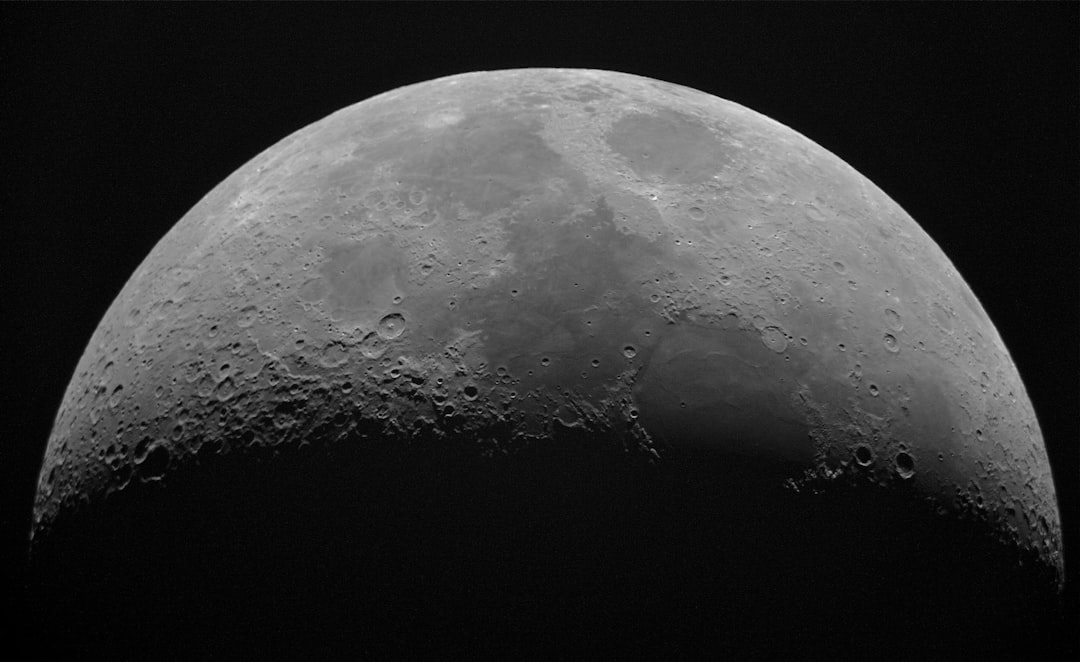
For the first time in human history, scientists are holding soil from the moon’s far side — and artificial intelligence is the key tool unlocking its secrets.
On June 3, 2026, China formally transferred 1.5 grams of lunar regolith collected by the Chang’e-6 lander to researchers at the Planetary Physics Department of the Russian Space Research Institute (IKI). The handover was the culmination of a technically extraordinary mission: autonomously landing on, drilling into, and launching from a hemisphere of the moon that never faces Earth.
For AI technologists and space scientists worldwide, this moment signals far more than a diplomatic exchange — it marks the operational debut of AI-integrated autonomous systems in one of the most signal-isolated environments ever attempted.
Key Takeaways
China’s Chang’e-6 returned the first samples ever retrieved from the moon’s far side, a region previously inaccessible for sample return.
1.5 grams of lunar regolith were formally transferred to Russian scientists at IKI on June 3, 2026.
AI and machine learning are central to rapid soil composition analysis, with computational pipelines processing spectral data far faster than manual methods.
The China-Russia collaboration sets a precedent — and raises questions — for how far-side data will be shared with the broader international scientific community.
The far side of the moon presents a challenge that no prior mission had fully overcome for sample return: without direct line-of-sight to Earth, radio communication is impossible. China solved this by deploying the Queqiao-2 relay satellite, which maintained a communication bridge while Chang’e-6 autonomously navigated the South Pole–Aitken Basin — one of the solar system’s largest and oldest impact craters.
The autonomous landing, drilling, and ascent sequence executed by Chang’e-6 demanded onboard decision-making that no human operator could provide in real time. The lander’s guidance system relied on pre-trained AI models for terrain recognition and hazard avoidance, operating independently for critical phases of the mission. The 1.5 grams delivered to IKI represent not only a scientific trophy but proof that AI-driven autonomous systems can operate reliably in signal-denied, high-stakes extraterrestrial environments. For robotics engineers watching from Tokyo, Houston, or Munich, that proof of concept is arguably as valuable as the soil itself.
AI and Computational Methods in Lunar Analysis
Once samples arrive in a laboratory, the analytical challenge begins. Far-side regolith is compositionally distinct from near-side material returned by Apollo and Luna missions — it is older, less contaminated by solar wind on its surface history, and potentially richer in primordial crust material. Identifying what makes it unique requires processing hyperspectral imaging data, isotope ratios, and mineral phase maps across thousands of data points simultaneously.
Machine learning models — particularly convolutional neural networks trained on existing lunar and Martian spectral libraries — can identify mineral signatures in hours rather than the weeks required by traditional manual petrography. Chinese research teams have published work on applying deep learning to Chang’e-5 near-side samples, and those pipelines are now being adapted for far-side material, where the ground-truth dataset is entirely new.
These computational breakthroughs will directly inform how AI systems are designed for upcoming sample-return missions. NASA’s Artemis program and JAXA’s lunar exploration roadmap both identify AI-assisted onboard analysis as a priority for reducing Earth-return data bottlenecks — a technical problem Chang’e-6’s approach has already begun to address in practice.
How AI Processes Lunar Samples
1
Sample Acquisition
Autonomous drill and scoop systems collect regolith; onboard AI verifies sample integrity before ascent.
2
Spectral Scanning
Hyperspectral and X-ray fluorescence instruments generate high-dimensional compositional data.
3
ML Classification
Neural networks pre-trained on lunar spectral libraries classify mineral phases and flag anomalies.
4
Cross-Mission Validation
Results are compared against Apollo, Luna, and Chang’e-5 datasets to identify far-side uniqueness.
The sample handover at IKI formalises a scientific partnership that has been building since China and Russia signed cooperation agreements for the International Lunar Research Station (ILRS), their jointly proposed permanent lunar base. Russian scientists will use the samples for independent analysis, creating a layer of international verification that strengthens the scientific credibility of Chang’e-6’s findings.
However, the arrangement also invites scrutiny. Western space agencies and independent researchers have raised questions about the openness of ILRS data-sharing protocols — specifically whether sample access will eventually be extended to ESA, NASA, or JAXA-affiliated scientists on equal terms, or whether the collaboration remains primarily a bilateral framework. Unlike the Apollo program’s broad international sample distribution, the current structure places China as the primary custodian deciding downstream access. Transparency around publication timelines and data embargo periods will be a key test of whether this partnership advances global open science or consolidates a separate geopolitical science bloc.
China’s technical leadership in space robotics and autonomous systems is no longer a future projection — it is a present reality. The Chang’e-6 mission demonstrated relay-satellite-enabled autonomous operations, AI-guided terrain navigation, and precision sampling at a location no other nation has reached. These capabilities compound: each mission generates training data that makes the next AI model more capable.
For the broader AI community, the integration of machine learning into mission-critical space operations represents a validation milestone. Autonomous systems that work on the moon’s far side — with multi-second communication latency and zero human override capability — set a reliability benchmark that industrial and medical AI developers watch closely as a proxy for edge-case robustness.
The response from competing space programs has been notable. NASA accelerated its partnership calls for commercial lunar payload services partly in response to China’s demonstrable sample-return cadence. ESA has expanded its lunar science budget and explicitly cited the need to maintain independent analytical capabilities as far-side samples enter circulation. India’s ISRO, fresh from Chandrayaan-3’s south pole landing, has signalled interest in bilateral sample-sharing frameworks of its own. The pace China has set is reshaping budget conversations and mission timelines across every major space agency — making the geopolitics of lunar soil as consequential as its geology.
Note
Note: The 1.5-gram transfer represents an initial allocation. The total Chang’e-6 sample cache is approximately 1.9 kilograms; access terms for non-ILRS partner institutions have not yet been publicly detailed by the China National Space Administration.
Key Takeaways
Historic sample transfer: China handed 1.5 grams of far-side lunar soil to Russian IKI scientists on June 3, 2026 — the first such material ever available for laboratory analysis.
AI is the analytical engine: Machine learning pipelines adapted from Chang’e-5 research are being deployed to classify far-side mineral compositions orders of magnitude faster than manual methods.
Autonomy is the real breakthrough: Chang’e-6’s signal-denied, AI-guided operations set a new benchmark for autonomous space robotics with implications well beyond lunar science.
Access questions remain: The bilateral China-Russia framework raises legitimate questions about broader international data sharing that will define the geopolitics of lunar science for the next decade.
Global ripple effects: NASA, ESA, and ISRO are visibly recalibrating lunar program timelines and budgets in direct response to China’s demonstrated sample-return capability.
Want to go deeper?
Subscribe to Asia AI Front for concise analysis of AI shifts across Asia and Russia.